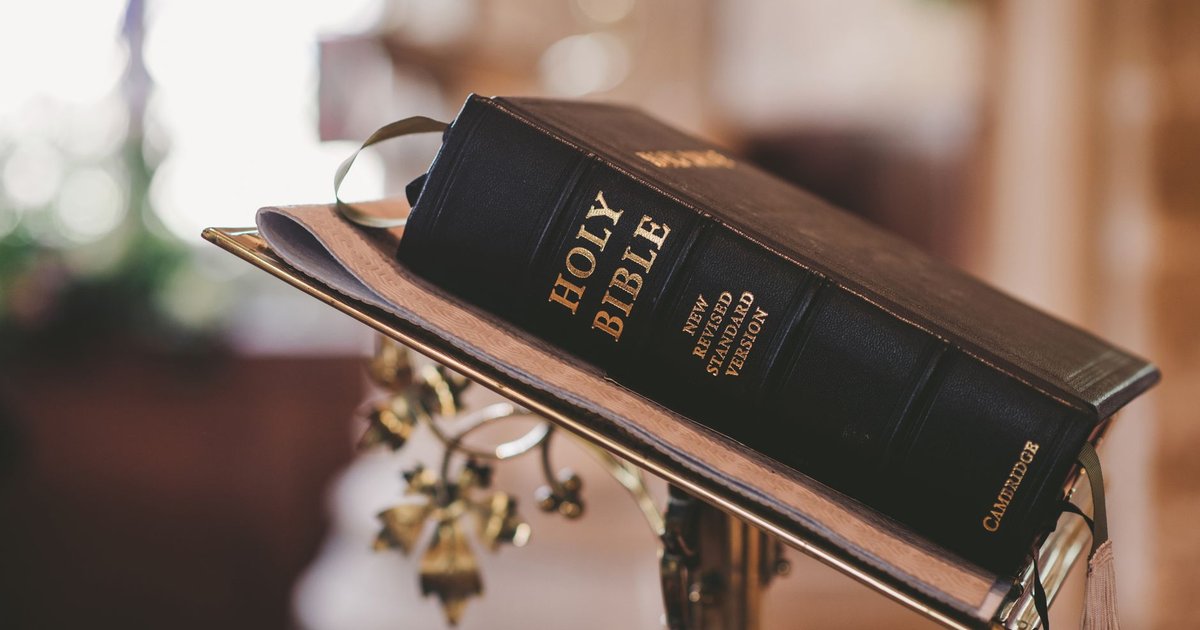
Biblical names have dominated American baby naming for most of recorded history. In 1900, the top 10 was almost entirely Old and New Testament names: John, William, James, George, Charles, Frank, Joseph, Henry, Edward, Walter. They retreated slightly in the mid-century (Michael, David, and Daniel held the line) and came roaring back in the 1990s and 2000s.
In 2024, the dominance is complete. Eight of the top 25 boys' names have direct biblical roots. Here's the full picture.
Boys: Biblical Names by Popularity
Old Testament
Noah — #2 (20,337 babies). The builder of the ark; a figure shared across the Hebrew Bible, Christianity, and Islam. Noah has been #1 or #2 in the US since 2012. It has everything: brief, clear, ancient, cross-cultural, impossible to misspell.
Levi — #12 (9,513 babies). Third son of Jacob; ancestor of the priestly tribe of Levi. Levi was popular in the 1880s and is now back near its highest point ever, driven by the broader biblical revival. It sounds contemporary — the -i ending, the two-syllable rhythm — but has 3,000-year roots.
Ezra — #13 (8,774 babies). The scribe and priest who led the return from Babylonian exile. Ezra is the Old Testament name that has risen fastest since 2010. Short, Old Testament, Jewish and broadly Christian at once, distinctive without being unusual.
Elijah — #8 (11,171 babies). The prophet taken up to heaven in a fiery chariot. Elijah has been one of the fastest-rising names in American data since the mid-1990s. It comes with a built-in short form (Eli, #92) and a musical quality — four syllables, three long vowels — that the current taste for elaborate names prefers.
Benjamin — #11 (9,814 babies). The youngest son of Jacob. Benjamin is the most established of the currently-popular Old Testament names — it has been in the top 20 almost continuously for fifty years. Ben is the obvious nickname; Benny is coming back.
Asher — #20 (8,123 babies). Eighth son of Jacob, whose name means "happy" or "blessed." Asher was virtually unknown in American naming before 2000. It's now top 25, driven by the same vintage-biblical revival as Levi and Ezra — a name that sounds completely contemporary while coming from the book of Genesis.
David — #31 (7,317 babies). The shepherd king; author of the Psalms. David has been in the top 25 almost continuously since the SSA data begins. It's the most durable Old Testament male name in American use — it never peaked and crashed the way Michael did; it just holds.
Joseph — #32 (7,223 babies). The dreamer with the coat; father of Jesus in the New Testament. Joseph has been top 10 as recently as the 1980s and is now at #32 — still rock-solid, slowly declining.
Isaac — #40 (6,498 babies). Son of Abraham, father of Jacob. Isaac has been climbing for twenty years. It has the same profile as Ezra and Asher: Old Testament, Jewish origin, distinctive but accessible, sounds current.
Caleb — #49 (5,766 babies). One of the twelve spies sent into Canaan. Caleb has been in the top 50 since the early 2000s — one of the first of the current biblical revival names to break through.
Ezekiel — #54 (5,390 babies). The prophet of the valley of dry bones. Zeke as a nickname makes it practical. Ezekiel would have been considered old-fashioned as recently as 1990; it's now top 55.
Isaiah — #56 (5,250 babies). The great prophet; the longest book of the prophets. Isaiah follows Ezekiel's pattern: a formal, four-syllable prophetic name with a strong nickname (Zay, Iy).
Samuel — #17 (8,310 babies). The judge and prophet who anointed Saul and David. Samuel has been quietly mid-chart for decades. Sam as a nickname gives it enduring practicality.
Jonah — #126 (2,879 babies). The prophet swallowed by a great fish. Jonah has been climbing steadily since the 2000s — a two-syllable, soft-sounding Old Testament name with an unmistakable story behind it.
Silas — #81 (4,108 babies). From the Aramaic/Hebrew tradition; companion of Paul. Silas sits at the intersection of Old and New Testament (the name appears in Acts), with Latin transmission (Silvanus). It's been one of the fastest-rising names since 2010.
Micah — #86 (3,909 babies). The minor prophet. Micah sounds contemporary — one syllable followed by a short vowel — while going back to the Hebrew Bible. It has been rising steadily.
Eli — #92 (3,723 babies). The high priest who raised Samuel. Eli functions as both a full name and a natural short form for Elijah (#8), Elias, Eliot, and Elliott. Three letters; ancient; versatile.
Malachi — #149 (2,404 babies). The last book of the Old Testament; means "my messenger." Malachi has broken into the top 150 in the 2020s — another prophetic name following Ezra and Ezekiel's path.
Abel — #220 (1,627 babies). The second son of Adam and Eve. Abel is one of the more unexpected biblical names to be climbing — its story is tragic, but the name reads as gentle and soft. It's mid-chart and rising.
New Testament
James — #5 (11,793 babies). The English form of Jacob, via Latin Jacobus. James is the great New Testament name in terms of American staying power — it has been in the top 10 for most of the past 150 years and is currently at #5. Biblical, royal, literary: James has never gone out of style.
Daniel — #16 (8,391 babies). The prophet (Old Testament) and the name appears in the New Testament context too; Daniel has been continuously popular. It ages well because it's short, classical, and has cross-cultural use across Christian, Jewish, and secular families.
John — #21 (8,047 babies). The apostle; the Baptist; the author of Revelation. John was the most popular boys' name in English history and is now at its lowest American ranking since the SSA began — but it's still #21. The Johns of 2024 may be the last cohort where John feels like a choice rather than an inheritance.
Matthew — #33 (7,078 babies). The evangelist; one of the twelve apostles. Matthew has been in the top 10 since the 1960s and is now gradually declining from that peak. Still very much in mainstream use.
Thomas — #39 (6,576 babies). The doubting apostle; means "twin" in Aramaic. Thomas has been in the top 50 almost continuously since the data begins. It's the New Testament name that feels most English and classic simultaneously.
Nathan — #62 (5,010 babies). The prophet who confronted David. Nathan bridges Old Testament and New (it appears in Luke's genealogy) and has been solidly mid-chart for decades.
Adam — #100 (3,497 babies). The first man; means "human being" or "made from earth" in Hebrew. Adam peaked in the 1980s and has been slowly declining since, but it holds at the top 100 through pure ubiquity.
Girls: Biblical Names by Popularity
Elizabeth — #17 (6,878 babies). The most resilient girls' name in the entire dataset — it has been somewhere between #7 and #25 continuously since SSA records began. Hebrew Elisheba ("my God is an oath"). Mother of John the Baptist.
Eliana — #18 (6,423 babies). Hebrew Eliana (my God has answered). Eliana is one of the fastest-rising biblical girls' names of the past decade — it's now top 20, having come from outside the top 100 in 2010. The -ana ending is performing especially well in current naming.
Abigail — #32 (5,499 babies). David's wise wife who averted a massacre; means "my father's joy." Abigail has been in the top 30 for over fifteen years. Abby as a nickname keeps it practical.
Naomi — #44 (4,605 babies). The mother-in-law of Ruth; means "pleasantness." Naomi has been one of the most consistent risers of the decade. It's the Old Testament girls' name equivalent of Ezra and Levi — ancient, Jewish, not church-name specific, sounds entirely contemporary.
Delilah — #50 (4,240 babies). The woman who betrayed Samson. Delilah is a fascinating case: a name with a definitively negative biblical association that has become top 50 in the US. The sound (three syllables, all soft vowels, ending in -ah) overrides the story for most parents. It's been climbing for a decade.
Hannah — #52 (4,054 babies). Samuel's mother; means "grace" in Hebrew. Hannah was top 5 in the early 2000s (Hannah Montana coincided with a natural peak) and has been declining slowly since. Still top 55 — one of the most established biblical girls' names in current use.
Leah — #53 (3,969 babies). Jacob's first wife; means "weary" or "wild cow" in Hebrew. Leah has been top 60 for over a decade — a warm, soft, short Old Testament name.
Eden — #72 (3,115 babies). The garden; means "place of pleasure" in Hebrew. Eden has been climbing steadily for ten years. It's primarily used as a girls' name in current US data and has the same celestial-natural quality that's driving Luna and Nova.
Sarah — #95 (2,697 babies). Abraham's wife; means "princess." Sarah has been in the top 200 continuously since the data begins and is one of the most stable biblical girls' names in the dataset — not climbing, not falling, just holding.
Lydia — #97 (2,663 babies). The first European convert to Christianity (Acts 16); a dealer in purple cloth from Thyatira. Lydia has been climbing since the early 2010s — a New Testament girls' name with classical roots that fits the current vintage-biblical revival perfectly.
Esther — #131 (2,206 babies). The Persian queen who saved the Jewish people. Esther peaked in the Victorian era and is reviving — it's part of the same vintage-revival wave as Evelyn and Hazel. Vintage, Jewish, literary, clear.
Mary — #132 (2,196 babies). The most used name in the Western world historically. Mary was #1 in the US from 1880 (when data begins) to 1961 — 81 straight years. It's now at #132. The question for the next twenty years is whether it revives through the same vintage-biblical wave that has lifted Ruth, Naomi, and Esther.
Ruth — #172 (1,767 babies). The daughter-in-law who stayed; the book bearing her name is one of the great short stories in the Hebrew Bible. Ruth has held unusually well — it has biblical gravitas, one syllable, the Bader Ginsburg association, and is now also associated with the Afrikaans/Dutch tradition.
Phoebe — #183 (1,639 babies). A deaconess mentioned by Paul in Romans; means "bright, shining" (the Greek lunar goddess). Phoebe has been climbing since Friends (1994–2004) and is now past its peak. The Greek-via-New-Testament pathway makes it one of the more complex origin stories.
Miriam — #251 (1,267 babies). Moses' sister; the first prophetess. Miriam is underused given its standing — it's one of the oldest names in the Hebrew tradition, the source name for Mary and Maria, and is now at #251 and climbing.
The pattern of the biblical revival
It started with boys. The biblical revival was visible on boys' charts by the early 1990s. Joshua, Jacob, and Daniel were top 10. Girls' names were still in the Jennifer-Jessica phase. By 2010 the girls' chart caught up: Hannah, Abigail, Sarah, and Elizabeth emerged alongside the newer Eliana, Naomi, and Delilah.
Old Testament wins over New. The names driving the most growth — Levi, Ezra, Asher, Jonah, Naomi, Eliana, Delilah — are all Old Testament. New Testament names (John, Matthew, Thomas, Mary) have held but not grown. This may reflect a broader cultural interest in the deeper, more archetypal stories of the Hebrew Bible.
The naming pool has deepened. In 1960, biblical boys' names meant John, James, David, Mark, and Luke. In 2024 it means all of those plus Ezra (#13), Asher (#20), Malachi (#149), Abel (#220), Silas (#81), and Micah (#86). Parents are reaching further into the text. The next wave — Gideon, Amos, Tobias, Lydia — is already entering the top 300.
Explore each name: Noah · Elijah · Levi · Naomi · Esther · Miriam
Data: SSA 2024 US release. Biblical classification based on explicit appearance in the Hebrew Bible, New Testament, or Apocrypha.