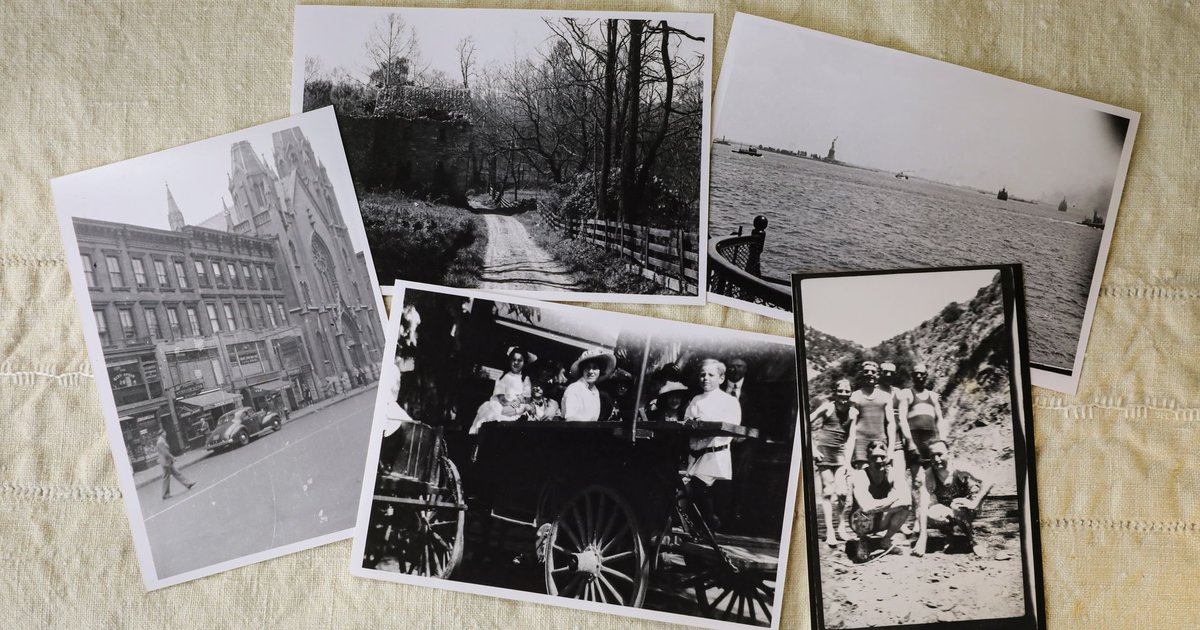
The year was 1914. Archduke Franz Ferdinand was assassinated in Sarajevo in June, triggering a war that would consume Europe. Woodrow Wilson was in the White House. The US was not yet in the war — that was three years away — and about 2.9 million babies were born. A remarkable number of them were named John or Mary.
Here's what the SSA data shows for 1914.
Top 15 Boy Names, 1914
| Rank | Name | 1914 babies | 2024 rank | Status |
|---|---|---|---|---|
| 1 | John | 76,141 | #21 | The most durable name in American history — top 5 for over a century |
| 2 | William | 58,124 | #5 | Back in the top 5 in 2024 |
| 3 | James | 55,809 | #5 | Outlasted almost everything |
| 4 | Robert | 41,023 | #90 | Sliding but still on the board |
| 5 | Joseph | 40,217 | #32 | Steady across 110 years |
| 6 | George | 36,118 | #195 | Recovering via vintage and royal associations |
| 7 | Charles | 34,906 | #50 | Back from a mid-century dip |
| 8 | Edward | 27,334 | #154 | Holding at mid-chart |
| 9 | Thomas | 26,882 | #39 | Quietly resilient |
| 10 | Henry | 25,761 | #9 | Back in the top 10 — one of the great vintage revivals |
| 11 | Frank | 20,104 | #573 | Peaked in the early 20th century; beginning a quiet revival |
| 12 | Walter | 19,887 | #223 | Reviving as a vintage cool name |
| 13 | Arthur | 17,613 | #207 | Reviving strongly, especially in Europe |
| 14 | Harold | 17,421 | #988 | Mid-century peak; not returning |
| 15 | Albert | 14,897 | #467 | Scientific associations keep it alive but not rising |
Top 15 Girl Names, 1914

| Rank | Name | 1914 babies | 2024 rank | Status |
|---|---|---|---|---|
| 1 | Mary | 64,286 | #132 | A century at #1 ended in the 1940s; holding on at the chart's edge |
| 2 | Helen | 33,217 | #865 | Peaked in this era; a very slow revival beginning |
| 3 | Dorothy | 28,405 | #693 | Not yet back but on parents' radar |
| 4 | Margaret | 23,941 | #209 | Actively reviving — longest recovery arc of any 1914 girl name |
| 5 | Ruth | 22,873 | #173 | Biblical and rising in the 2020s |
| 6 | Mildred | 21,084 | #2,412 | Almost entirely out of use |
| 7 | Anna | 20,612 | #35 | The lone top-10 survivor still in the modern top 50 |
| 8 | Elizabeth | 19,377 | #17 | Top 20 in 2024 — the most resilient girl name in American history |
| 9 | Frances | 17,836 | #351 | Quiet mid-chart presence; not yet reviving fast |
| 10 | Marie | 16,924 | #431 | Slow decline; French feel keeps it alive |
| 11 | Mabel | 14,803 | #285 | Actively reviving as a vintage pick |
| 12 | Alice | 14,591 | #57 | One of the strongest vintage revivals on this list |
| 13 | Florence | 13,872 | #364 | Reviving, helped by Italian city associations |
| 14 | Lillian | 13,204 | #77 | Back in the top 100 |
| 15 | Rose | 12,937 | #87 | Steady vintage favourite; not fully revived but holding |
What stands out
John's dominance. In 1914, roughly 1 in 30 boys born in the US was named John. In 2024, John is #21 with about 8,000 babies — still alive, but a shadow of its 1914 presence. No name has ever maintained the kind of singular dominance John held across the first half of the twentieth century.
The boys' list has aged almost perfectly. Ten of the 15 boys' names from 1914 are still inside the top 225 today. Five are back in the top 50. Henry — at #9 in 2024 — has made one of the most dramatic comebacks of any name in the dataset, going from #10 in 1914 to near-invisibility in the 1970s and back to the top 10 now.
The girls' list is splitting. The 1914 girls' names are falling into two camps: the genuinely timeless ones (Elizabeth, Anna, Alice, Lillian, Rose, Margaret) are reviving; the era-specific ones (Mildred, Helen, Dorothy) remain mostly in dormancy. The gap between these groups is widening.
The great concentration. In 1914, the top 15 boys' names accounted for an estimated 35% of all male births. In 2024, the top 15 boys' names account for around 18%. Naming in 1914 was dramatically more homogeneous — there were far fewer names in circulation, and the leading names dominated in a way modern parents find almost impossible to imagine.
The vintage revival, measured. Of the 1914 girls' list: Alice is at #57, Lillian at #77, Rose at #87, Margaret at #209, Florence at #364, Mabel at #285. These are the names parents in 2024 think of as "charming and old but not too old." Names from 1914 now have the century of distance that makes them feel genuinely fresh again.
See the full rankings for 1914 or explore names like Henry, Alice, Margaret and Elizabeth in depth.
Data: U.S. Social Security Administration 1914 and 2024 releases. SSA records from the early 20th century are less complete than modern data — early registrations were not universal.