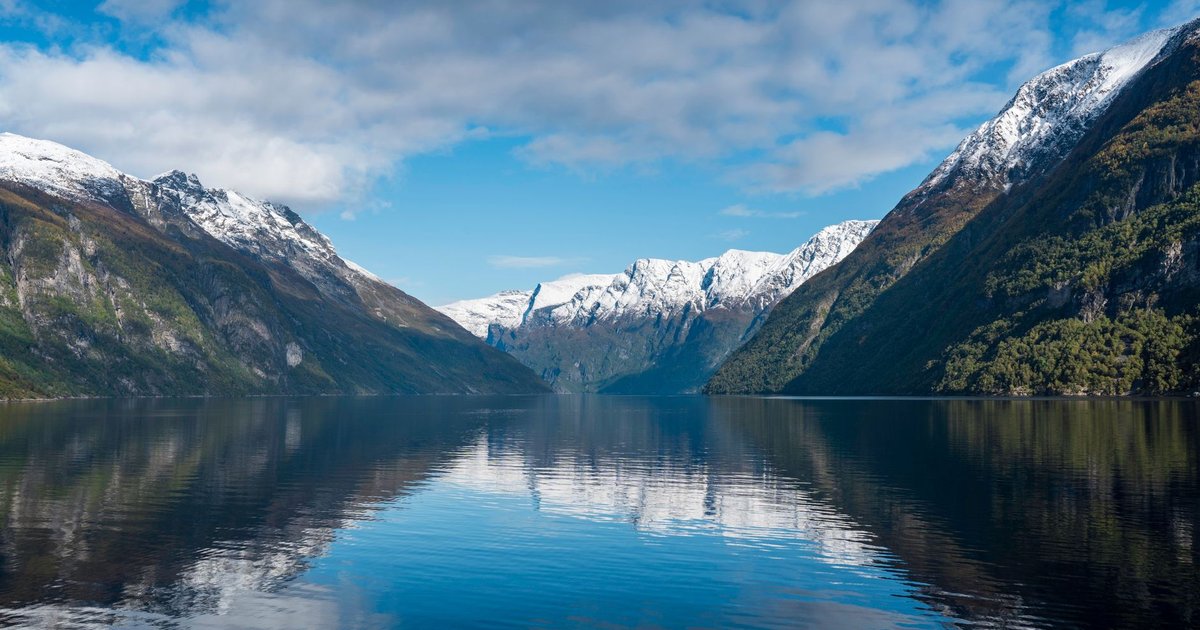
Scandinavian naming has crept into the modern American chart in two waves — first via 19th-century Norwegian, Swedish, and Danish immigration through the Midwest, and again over the last decade via a fresh appetite for clean, vowel-light, tree-and-sky names. The current wave is the louder of the two.
Girls
| Name | 2024 rank | Nordic root |
|---|---|---|
| Nora | #22 | Anglicised in Ireland, but the form most common in modern Scandinavia |
| Freya | #159 | Old Norse Freyja — the goddess of love and beauty |
| Astrid | #383 | Old Norse Áss + fríðr — "godly beauty" |
| Greta | #855 | Short form of Margareta, naturalised in Swedish |
| Liv | #874 | Old Norse for "life" |
| Annika | #962 | Swedish diminutive of Anna |
| Ingrid | #1,092 | Old Norse — Ing (the god) + fríðr |
| Frida | #1,252 | from fríðr, "peace" or "beautiful" |
| Linnea | #1,608 | Swedish — the twinflower, named for Carl Linnaeus |
| Kari | #1,841 | Norwegian short form of Katherine |
Further down the chart, names like Solveig, Saga, Signe, Tove, and Stina are unranked in the US — clearly Nordic, and likely to surface as the wave continues.
Boys
| Name | 2024 rank | Nordic root |
|---|---|---|
| Axel | #78 | Scandinavian form of Absalom — "father is peace" |
| Felix | #177 | Latin root, but the form dominant in modern Sweden and Denmark |
| Finn | #198 | Old Norse for "Finn" — a Finn or Lapp; also Irish |
| Eric | #251 | Old Norse Eiríkr — "eternal ruler" |
| Tristan | #267 | Old French / Pictish, but a Nordic favourite via the saga tradition |
| Bo | #451 | Old Norse Búi — "to live" |
| Erik | #476 | the original Nordic spelling of Eric |
| Odin | #479 | the Allfather of Norse mythology |
| Soren | #571 | Danish form of Latin Severinus |
| Magnus | #749 | from Latin, but historically a Nordic king's name |
| Bjorn | #767 | Old Norse for "bear" |
| Anders | #830 | Scandinavian form of Andrew |
| Henrik | #917 | Scandinavian form of Henry |
| Leif | #925 | Old Norse for "heir" or "descendant" |
| Loki | #1,767 | the Norse trickster god |
| Thor | #2,820 | the Norse thunder god |
Which specific countries?
"Scandinavian" names come from three distinct national traditions — Norway, Sweden, and Denmark — with significant overlap but also distinct flavors.
Norway contributes names rooted in Old Norse saga tradition: Leif (as in Leif Erikson), Astrid, Sigrid, Ragnar, Bjorn, Gunnar. Norwegian naming also draws from nature: Elvira, Solveig, Torunn. Norwegian names tend to be slightly longer and more complex than Swedish minimalism.
Sweden has produced some of the most internationally successful Nordic names: Axel, Felix (now the top boys' name in Sweden), Alma, Maja, Elin, Signe. Sweden's naming tradition has modernized significantly since the 1960s — the current Swedish top names are quite short and international, which is why Swedish names cross to the US with particular ease.
Denmark favors names with a slightly softer quality: Soren (from Søren), Magnus, Anders, Freja (the Danish spelling of Freya). The Danish umlaut-heavy spelling (Søren, Bjørn) creates transliteration challenges in English, which is why Soren and Bjorn appear without their diacritical marks.
Old Norse roots and the Viking naming system
Most traditional Scandinavian names trace directly to Old Norse, the language spoken across Scandinavia and Iceland during the Viking Age (roughly 793–1066 CE). Old Norse had a rich naming vocabulary that drew from several wells:
God names and divine epithets: Odin (the Allfather), Thor (thunder), Freya (the goddess), Baldur (the shining one). These were used directly in Old Norse society — calling a child Torstein ("Thor's stone") was invoking divine protection, not sacrilege.
Compound names combining qualities: The system of combining two meaningful elements was central to Old Norse naming. Astrid = Áss (god) + fríðr (beautiful). Ingrid = Ing (a god) + fríðr. Sigrid = sigr (victory) + fríðr. The "-fríðr" ending is so common that Astrid, Ingrid, and Sigrid are all essentially variations on the same theme.
Nature names: Björn (bear), Orm (serpent), Ulf (wolf), Arn/Örn (eagle). Animal strength names were common and several have survived into modern use.
Patronymic surnames: The Old Norse naming system used patronymics rather than family names — Leif Erikson meant "Leif, son of Eric." This system persisted in Iceland to the present day (Sigríður Eiríksdóttir, "Sigrid daughter of Erik"). In the Scandinavian countries, fixed family surnames replaced patronymics in the 19th century.
Which are rising fastest in the US
Freya is the fastest-rising Scandinavian name on the US girls' chart — from around #400 in 2018 to #159 in 2024. Its combination of mythology, the -a ending, and two clear syllables makes it almost perfectly calibrated for the American market.
Odin has gone from rarely-seen to #479 in boys — driven by Norse mythology's pop culture moment (Marvel's Thor films, the Vikings TV series). It's likely to continue climbing.
Astrid (#383) is climbing more slowly but more steadily — it has Scandinavian immigrant heritage behind it as well as current pop culture visibility.
Magnus (#749) is the quiet mover — a name with genuine historical weight (Magnus was the name of Scandinavian kings from Norway to the Crusades) that has crept into American use without a specific cultural event driving it.
What's driving it
Three forces, in increasing order of size:
- Heritage revival. The Norwegian-Swedish-Danish-American population of the Upper Midwest is reaching back past the assimilation-era John/Mary to the great-grandparents' Astrid/Erik.
- **Norse mythology and Vikings.** Once a name is on a major streaming show — Ragnar, Lagertha, Bjorn, Floki, Ivar — it loses its "too foreign to spell" force-field for everyone. Marvel's Thor and Loki did the same job for casual viewers.
- The pure aesthetic. Modern American naming favours short, vowel-rich, easy-to-spell names. Nordic naming has been doing that for a thousand years: Liv, Bo, Saga, Soren, Astrid, Nora. The fit is almost perfect.
Frequently asked questions
Is Nora really Scandinavian? Nora has multiple origins — it's used as a short form of Eleanor or Honora in Irish/English tradition, and it's independently common across Scandinavia where it's often a short form of Leonora or Eleonora. In US usage, the Irish/English tradition was historically dominant, but the Nordic association is real. It's the overlap that's pushed it to #22 — it draws parents from multiple cultural backgrounds.
Why does the -a ending help girls' names cross? English speakers are extremely comfortable with girls' names ending in -a (Emma, Olivia, Sophia, Aurora, Stella). Nordic girls' names that happen to end in -a — Freya, Astrid, Ingrid, Frida, Annika, Linnea — cross far more easily than those that don't. Names like Solveig, Tove, or Signe end differently and face more resistance.
Are Thor and Loki actually being used as baby names? Yes, genuinely. Thor at #2,820 and Loki at #1,767 are both in SSA data, meaning at least 5 US children received each name in 2024. The Marvel movies almost certainly drove this — without the MCU, these names would probably be unranked. Both names have legitimate Old Norse heritage, so this isn't purely pop culture invention.
What Scandinavian names aren't on the US chart yet but should be? Saga (Old Norse, "story" — also the name of a Norse goddess of prophecy), Tove (Old Norse, "beautiful"), and Mette (Danish form of Margaret) all check every box for US adoption: short, clear, phonetically manageable. None of them currently rank in the US top 2,000, but all are climbing in their home countries.
If you're betting on the next breakout, the four-letter Nordic girls' names (Liv, Tove, Saga, Mette) check every box for the modern US wave. They're each unranked or below #800 today and have nothing structural keeping them from rising.
For other origin angles see our Greek, Hebrew, Irish, and Italian spotlights.
Data: U.S. Social Security Administration 2024 release. "Unranked" means fewer than five US births that year. Some names with shared roots (Felix, Tristan) are included where modern Scandinavian usage is dominant.