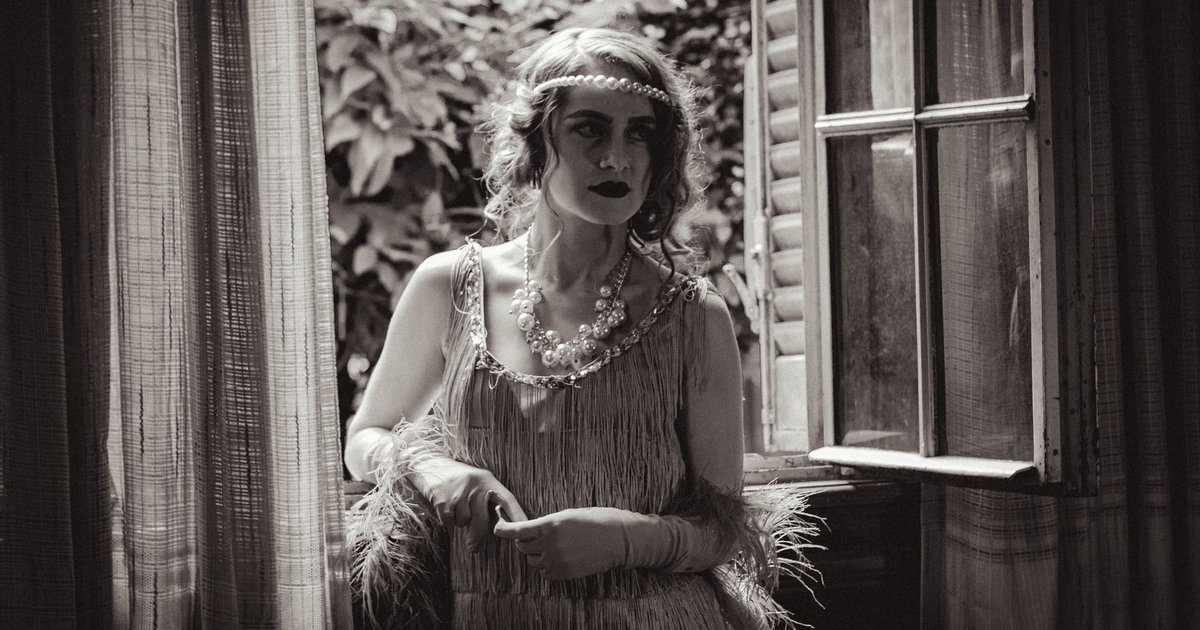
There's a 100-year rule in baby naming: names that were popular in your great-grandmother's day are far enough removed to feel fresh again. The 1920s names are right in the sweet spot, and a handful of them have come all the way back.
To make this list, a name had to be:
- Top 200 for US girls in the 1920s
- Dropped well below 500 for at least one decade between 1970 and 2000
- Back in the 2024 top 250
The result is a tight pack of 12 names — many of them now firmly in the modern top 100.
The comeback list
| Name | 1920s peak | Mid-century low | 2024 rank |
|---|---|---|---|
| Violet | #77 | #734 | #15 |
| Hazel | #34 | #676 | #19 |
| Stella | #82 | #543 | #49 |
| Adeline | #176 | #805 | #58 |
| Eloise | #164 | #1,466 | #64 |
| Elsie | #51 | #848 | #155 |
| Olive | #151 | #3,677 | #171 |
| Rosalie | #170 | #784 | #177 |
| Ada | #136 | #667 | #193 |
| Lila | #175 | #751 | #207 |
| Mabel | #83 | #1,506 | #222 |
| Vera | #75 | #524 | #226 |
The most dramatic recoveries
- Violet went from #77 in the 1920s, all the way down to #734 in its 1990 low, and is now the #15 girl name in the US. That's a swing of over 700 places back into the very top of the chart.
- Hazel dropped to #676 and is now #19 — a similar reclamation. Both names benefit from the same aesthetic (short, vowel-rich, color-tied, vintage-coded).
- Olive's low point was #3,677 — nearly out of the dataset entirely. It's back at #171 today, propelled in part by its proximity to chart-topper Olivia.
Why these and not others?
Many 1920s names didn't come back. Gertrude, Mildred, Beatrice, and Doris all peaked in the same decade but have stayed out of the top 500 in 2024. The names that returned tend to share three properties:
- Short or visually compact: Ada, Lila, Vera, Olive, Hazel.
- Soft endings — "-ie", "-a", "-ose": Elsie, Stella, Rosalie, Eloise.
- Nature or virtue ties: Violet, Olive, Hazel, Vera ("truth"), Stella ("star").
More 1920s names on the edge of revival
Beyond the 12 confirmed comeback names, a group of 1920s picks is currently in the 250–500 range and climbing — the next wave of potential revivals:
- Iris — peaked in the 1920s at around #70, fell to #900 in the 1980s, and is now at #71 in 2024. Technically already back — its rise was so gradual that it often isn't counted in the "comeback" conversation.
- Margot — the French spelling of Margaret was a 1920s choice and is now at #126, driven partly by the Barbie movie's Margot Robbie association.
- Florence — #325 in 2024 after bottoming near #800 in the 1990s. Florence + the Machine accelerated the revival; the city association helps too.
- Cora — #89 in 2024, with a 1920s peak around #50. Downton Abbey's Cora Crawley brought it back into the cultural conversation.
- Opal — in the 1920s this was a top-100 name (gemstone names were fashionable); it fell to virtual obscurity and is now at around #560, rising fast. If Hazel and Violet can return, Opal seems close.
- Goldie — a genuine 1920s pick (short for Goldilocks-era aesthetic) that is re-emerging via the "-ie" diminutive trend.
- Winifred — longer, more complex, but the short form Winnie is at around #450 and climbing.
Why vintage is winning right now
The vintage naming wave is not an accident or a whim — it reflects several converging forces:
The 100-year distance. A name that was popular in your great-grandmother's generation carries no living association with "old people." Vera and Hazel aren't names of nursing-home residents (those would be Linda, Sandra, Barbara); they're names that exist in a romantic, sepia-toned past rather than an adjacent generation.
The over-saturation of recent names. A generation of parents who were Emilys and Jennifers didn't want another Emily or Jennifer. They reached back past the 1980s–1990s glut to an era that felt genuinely different. The vintage names filled the demand for distinctiveness without requiring an invented name.
Cultural reinforcement. Downton Abbey, Call the Midwife, various 1920s-set films and shows have kept the aesthetic visible. When audiences fall in love with a character named Violet Crawley or Elsie Hughes, the names gain cultural warmth that persists into naming decisions.
The nature-and-virtue connection. Modern parents value names that carry meaning beyond their sound. Violet, Hazel, Olive (nature), Vera (truth), Stella (star), Eloise (various interpretations including "healthy") all have embedded significance that feels intentional.
Decade comparison
The vintage wave is actually repeating a historical pattern:
- In the 1960s, names popular in the 1870s–1880s (Victoria, Emily, Emma) began cautiously returning.
- In the 1990s, names popular in the 1900s–1910s (Grace, Ruby, Lily) came back in force.
- In the 2020s, names popular in the 1920s–1930s (Violet, Hazel, Mabel) are making their move.
If the pattern continues — and it shows no sign of stopping — the names popular in the 1940s (Sandra, Barbara, Shirley, Donna) will be the next candidates for a comeback attempt around the 2040s. That seems impossible right now; it seemed impossible for Mabel in 2005 too.
How to predict the next wave
The filters that identify which 1920s names returned well also predict which names are next. Apply them to the 1930s list:
- Is it short (under 7 letters) or visually clean?
- Does it have a soft ending (-a, -ie, -y, -e)?
- Does it have a nature, virtue, or color tie?
- Is it sufficiently distant from a "middle-aged person name" today?
Running those filters over 1930s names surfaces candidates like Ruth (already #172, rising), Dorothy (not yet back but watching), and Betty (showing up on "considering" lists without breaking the top 400 yet).
Frequently asked questions
Why did these names almost disappear in the first place? The mid-century (1940s–1970s) was an era of deliberate modernity — parents wanted names that felt fresh and contemporary, not inherited from grandparents. Names like Dorothy, Mabel, and Vera were associated with the Depression and the world before television. The generational desire to break with the past temporarily wiped out huge swaths of the Victorian and Edwardian name stock.
Which of the 12 comeback names has the most room left to grow? Mabel (#222) and Ada (#193) both still have significant runway. Violet (#15) and Hazel (#19) are already near their likely ceiling given the fragmentation of the modern chart. Eloise (#64) is still climbing and could break the top 50.
Is the vintage trend affecting boys' names too? Yes, though more slowly. Theodore (#4), Henry (#6), and Walter (still in the 300s but rising) are 1920s boys' names that have returned. The boys' vintage chart is generally about a decade behind the girls' side.
Could Gertrude or Mildred ever come back? The statistical answer is: not within the next 20 years at their current trajectories. Both names fail the soft-ending and phonetic-profile tests. But a generation further on? Mildred's short form Millie is already top 200. The reintroduction sometimes starts from the nickname.
If you're hunting for the next 1920s name to break out, those filters are a decent starting place. Check the 1920s decade page for the full top 100 of the era, or use the Picker with an "antique" filter to browse hundreds more.
Data: U.S. Social Security Administration 1880–2024. We took the best (lowest) rank in each name's 1920–1929 window for "1920s peak", the worst rank in 1970–2000 for "mid-century low", and the 2024 SSA rank. Names with no rank in a given window are reported as "unranked".