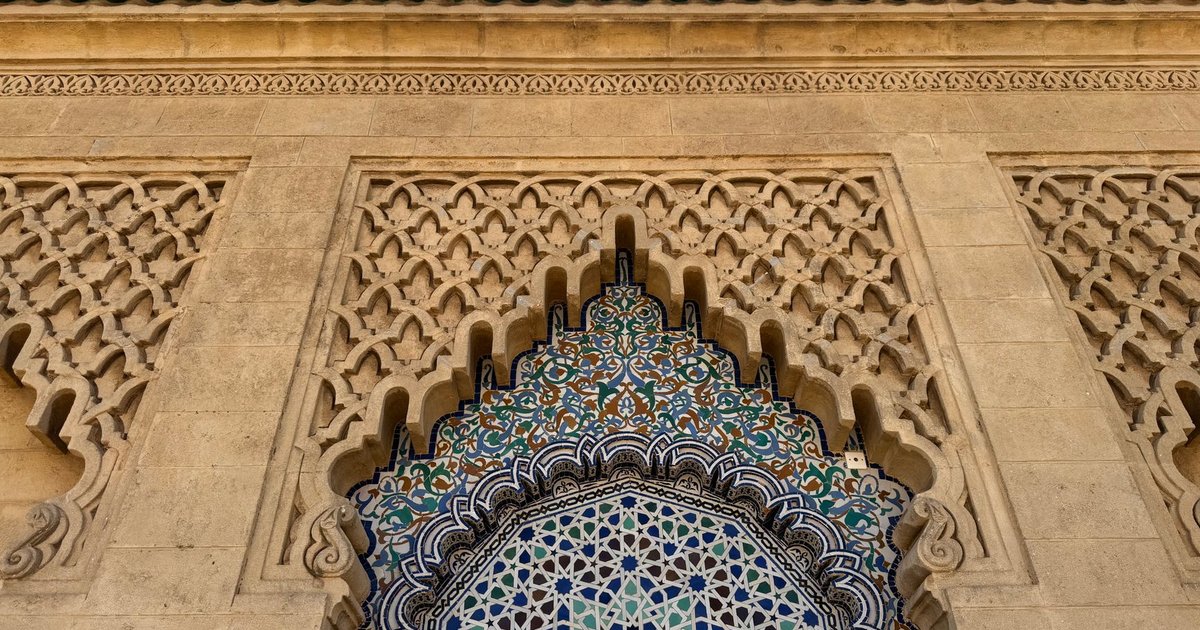
The Arabic and Persian layers of the US chart have grown faster than almost any other origin category over the past two decades. Layla is a top-40 girl name. Amir and Adam are top-100 boys. And the long tail is full of names — Yara, Nour, Rayan, Idris — that simply did not appear in American data in 2000.
Arabic-origin girls
| Name | 2024 rank | Arabic root |
|---|---|---|
| Layla | #37 | layla, "night" |
| Aaliyah | #93 | 'aaliya, "ascending" or "exalted" |
| Sarah | #95 | shared with Hebrew — "princess" |
| Amira | #136 | "princess" or "leader" |
| Sara | #188 | shorter form of Sarah |
| Lila | #207 | "night" (cognate of Layla) |
| Zara | #234 | "flower in bloom" |
| Aliyah | #235 | variant of Aaliyah |
| Leila | #268 | variant of Layla |
| Fatima | #316 | the Prophet's daughter — "she who weans" |
| Aisha | #346 | "living" or "she who lives" |
| Mira | #380 | "princess" or "wonder" (also Slavic) |
| Maryam | #390 | Arabic form of Mary |
| Nadia | #513 | from nada, "dew" or "generosity" |
| Lina | #567 | "tender" |
| Yara | #578 | "small butterfly" |
| Noor | #709 | "light" |
| Inaya | #760 | "care" or "concern" |
| Salma | #870 | "safe" or "peaceful" |
Arabic-origin boys
| Name | 2024 rank | Arabic root |
|---|---|---|
| Amir | #95 | "prince" or "commander" |
| Adam | #100 | shared with Hebrew — "man" or "earth" |
| Muhammad | #245 | the Prophet — "praiseworthy" |
| Zayn | #249 | "beauty" or "grace" |
| Omar | #260 | "long-lived" or "flourishing" |
| Ali | #323 | "elevated" or "exalted" |
| Ibrahim | #359 | Arabic form of Abraham |
| Malik | #429 | "king" |
| Yusuf | #475 | Arabic form of Joseph |
| Hamza | #527 | "lion" — uncle of the Prophet |
| Rayan | #579 | "gates of paradise" |
| Hassan | #649 | "handsome" or "good" |
| Ahmad | #669 | "highly praised" |
| Zayd | #684 | "growth" or "abundance" |
| Idris | #739 | a prophet — "interpreter" |
| Yousef | #766 | variant of Yusuf |
| Abdullah | #781 | "servant of God" |
| Karim | #819 | "generous" or "noble" |
Persian-origin names
The Persian layer is smaller in volume but distinctive. Many of these names share Sasanid or Zoroastrian roots, and several have become global through Persian poetry and history.
Boys:
- Cyrus — #254. Kūrush, possibly "sun" — the Achaemenid king.
- Kian — #416. From Kayanian, a legendary Persian dynasty — "king" or "noble".
- Damon — #454. Greek-Persian crossover — "to tame" in Greek; a Persian historical name.
- Darius — #746. Dārayavauš, "holding firm to the good" — three Persian emperors.
- Arman — #1,293. "Wish" or "aspiration".
Girls:
- Layla — also Persian via the Layla and Majnun epic
- Jasmine — #199. From yāsamīn, the flower
- Leyla — #601. Variant of Layla
- Soraya — #913. Soraya — the Pleiades constellation
- Yasmin — #917. Variant of Jasmine
- Roxanne — #1,275. Roxana, "bright" — Alexander the Great's wife
The Arabic vs Persian distinction

Arabic and Persian are entirely separate language families. Arabic is a Semitic language (related to Hebrew, Aramaic, and Amharic). Persian (Farsi) is an Indo-European language, more closely related to English than to Arabic — the same family as Greek, Latin, and Sanskrit.
The two traditions overlap in names primarily because of Islam. The Quran was written in Arabic, and the Arabic of the Quran became the sacred language of the entire Muslim world — including Iran, Central Asia, and South and Southeast Asia — regardless of local language. Persian Muslims adopted Arabic religious names: Muhammad, Ibrahim, Fatima, Aisha, Omar. At the same time, Persian-origin names (Cyrus, Darius, Jasmine, Soraya) persisted within the Iranian tradition.
In US data, it's often impossible to separate the streams. A family of Iranian origin might name their child Muhammad (Arabic) or Kian (Persian) or either, depending on their tradition.
How Arabic names travel through Islam
Arabic names don't just belong to Arabic-speaking families — they belong to the entire Muslim world. Muhammad is the most-given name in the world globally, used in Morocco, Indonesia, Nigeria, Pakistan, Turkey, and the United States. The distribution follows the geographic spread of Islam.
For US data, this means Arabic names arrive via many routes simultaneously:
- Arab-American families (Lebanese, Egyptian, Syrian, Palestinian, Yemeni, Moroccan origin)
- South Asian Muslim families (Pakistani, Bangladeshi, Indian Muslim)
- African Muslim families (Somali, Ethiopian, Nigerian Muslim, Senegalese)
- Southeast Asian Muslim families (Indonesian, Malaysian)
- Iranian families (who use many Arabic names alongside Persian ones)
When Layla reaches #37 on the US girls' chart, that number represents families from dozens of countries using the name through different but overlapping traditions.
Pronunciation guide
Arabic and Persian phonology has several sounds that don't exist in English. In US usage, names are typically simplified:
**The ayn (ع):** A sound made deep in the throat with no English equivalent. Names like Omar ('Umar) and Ali ('Ali) technically start with this sound; in English it's dropped or replaced by a glottal stop.
**The qaf (ق):** A uvular plosive — like a "k" made at the very back of the throat. Names like Yusuf contain sounds that English rounds off.
**The kha (خ):** Like the German "Bach" or Scottish "loch." Appears in names like Khalid (which becomes "KHA-lid" in Arabic but "kha-LEED" in American pronunciation) and in surnames.
Vowel length: Arabic distinguishes short and long vowels, which affects stress and meaning. Layla (layla, long a) vs. Lila (short vowels) are the same concept but different lengths. In English, this distinction typically disappears.
US pronunciation conventions:
- Layla — LAY-lah (accurate)
- Amir — ah-MEER (accurate)
- Omar — OH-mar (American) vs. 'OO-mar (classical Arabic)
- Muhammad — moo-HAM-mad or muh-HAM-mad (both heard; classical Arabic is closer to "mu-HAM-mad")
- Ibrahim — EE-bra-him or ih-bra-HEEM (varies by family tradition)
What's driving it
The growth is mostly demographic: Arab-American and Iranian-American families have become a meaningful share of births in major metros, and second-generation parents are no longer trimming names to fit Anglo expectations. But two trends affect the broader chart too:
- Soft, two-syllable, vowel-rich names work universally. Layla, Sara, Mira, Nora, Yara, Lina — these read as Arabic, Persian, Hebrew, and generic-modern at once. They cross.
- Single-syllable boys' names are open territory. Amir, Adam, Omar, Ali, Zayn — three or four letters, easy to spell, no awkward consonants. The chart is hungry for short boys' names. Arabic naming is supplying them.
Frequently asked questions
Is Layla Arabic or Persian? Both. The Arabic word layla means "night," and the name appears in Arabic poetry dating to the 7th century CE (the story of Layla and Majnun, sometimes called the Arabic Romeo and Juliet). The name also circulates widely in Persian-speaking communities via the same epic, which was retold in Persian by the 12th-century poet Nizami. In US data, both communities contribute to Layla's #37 ranking.
Why is Muhammad (#245) not higher given that it's the most-given name worldwide? The US Muslim population is a smaller share of total births than in many countries where Muhammad ranks #1. Additionally, Muslim families in the US often give children an Arabic religious name alongside an English-accessible name — a child might be named Muhammad on the birth certificate but called by a middle name day-to-day. The #245 ranking reflects strict first-name usage only; the broader cultural presence of the name is larger than that rank suggests.
Are names like Jasmine and Amber Arabic/Persian in origin? Yes. Jasmine comes from Persian yāsamīn (the jasmine flower), entering English via French. Amber comes from Arabic 'anbar (ambergris), entering English via Old French and medieval trade. These names are so thoroughly naturalized in English that their Arabic/Persian origins are invisible to most people using them.
Which Arabic or Persian name is most likely to break into the top 20? Layla (#37) is the closest and most likely. It has all the right characteristics: two syllables, ends in a vowel, easy to spell, culturally resonant without being foreign-sounding to non-Arabic ears. A few more years of growth could push it to #20 or higher. On the boys' side, Amir (#95) is already knocking on the top-100 door and could reach the top 50 within a decade.
For other origin spotlights see our Greek, Hebrew, Italian, and Scandinavian posts.
Data: U.S. Social Security Administration 2024 release. Etymologies follow standard references; some names (Mira, Damon) have multiple roots and are included where the Arabic or Persian root is well-attested. "Unranked" means fewer than five US births that year.