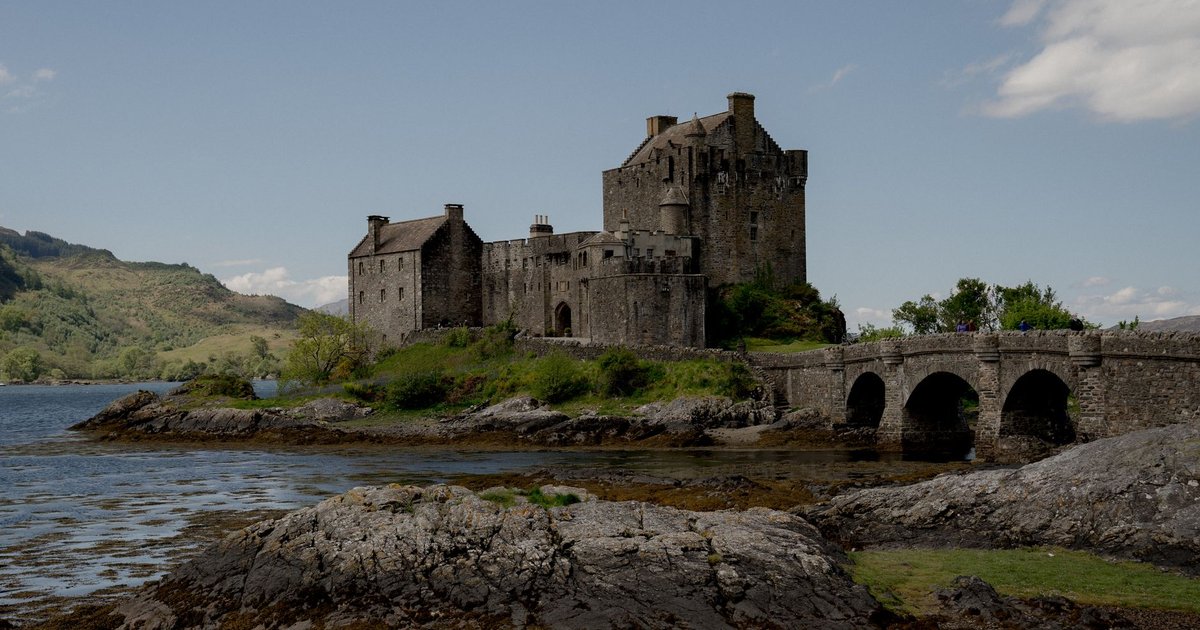
Scotland has punched above its weight in baby naming for decades. Liam — the number one boys' name in the United States in 2024 — is an Irish and Scottish Gaelic form of William. Isla — the number 35 girls' name — is named for the Scottish Isle of Islay. The Scottish naming tradition has given English a disproportionate share of names that feel both ancient and modern at once.
Here are the most popular names of Scottish origin in 2024 US data, with SSA figures.
Girls
Isla — #35 (5,367 babies). Named for the Isle of Islay in western Scotland. Pronounced "eye-la." Isla has been one of the most popular girls' names in Scotland and England for over a decade, and it arrived in the US charts in the early 2010s. It has the sound profile that drives current naming preferences: two syllables, long vowel, soft consonant, ending in -a. Isla Fisher made the name visible to American audiences earlier, but the trajectory goes beyond any single celebrity.
Mackenzie — #200 (1,520 babies). From the Gaelic Mac Coinnich (son of Coinneach). Mackenzie has been used as a girls' name in the US since the 1990s; it was top 10 for girls in the early 2000s and has been gradually declining since. Still top 200 — one of the most established Scottish-origin girls' names in American use.
Maisie — #255 (1,241 babies). Scottish pet form of Margaret. Maisie has the diminu-tive warmth of a Scots nickname (like Elsie and Bessie from their formal originals) without sounding old-fashioned. It's been climbing in the US since the mid-2010s, driven partly by Game of Thrones (Maisie Williams as Arya Stark).
Blair — #218 (1,412 girls). Scottish place name meaning "plain, field." Blair is thoroughly gender-neutral in use — #218 for girls, #2,164 for boys in 2024. On the girls' side it's been climbing since around 2009 (Gossip Girl's Blair Waldorf). It has the clean, one-syllable, surname-as-first-name quality that drives so many current choices.
Bonnie — #441 (703 babies). From the Scots adjective bonnie (pretty, attractive), which itself comes from the French bonne. Bonnie is one of the most cheerful names in the data — it has the vintage quality of Rosie or Daisy but with a specifically Scottish flavor. Still mid-chart and slowly reviving.
Skye — #480 (642 babies). Named for the Isle of Skye in the Scottish Highlands. Skye has been used as a nature name and a Scottish name simultaneously — it's the atmospheric, elemental name that works for the same reasons Aurora and Nova do, but with a distinctly Celtic geography behind it.
Fiona — #406 (782 babies). Created or popularized by the Scottish author James Macpherson in the 1760s, from the Gaelic fionn (white, fair). Fiona entered the American mainstream partly through Shrek (2001), but it has deeper Scottish literary roots. It's at mid-chart and holding — a name that would be considered Scottish by most speakers without necessarily knowing why.
Boys
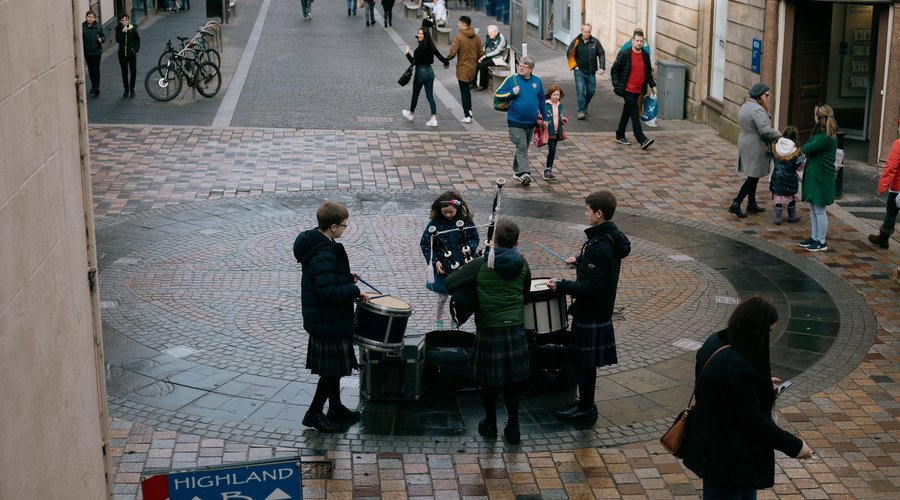
Liam — #1 (22,164 babies). Irish and Scottish Gaelic form of William. The most popular name in the United States in 2024 has Scottish-Irish roots that go back through the Norman Guilhelm to Germanic Willahelm. Liam as a standalone name (rather than a nickname for William) became common in Ireland and Scotland before crossing to the US. Noel Gallagher's brother Liam Gallagher and Liam Neeson established it as a name that felt both Celtic and international.
Rowan — #71 (4,647 babies). From the Gaelic ruadhan (little red one) or the rowan tree. Rowan is Celtic across both Irish and Scottish traditions. It's one of the few genuinely unisex names currently in the top 75 for both boys and girls. Its cross-gender use actually helps longevity — it avoids the "this is a boys' name" decay that ages distinctly masculine names faster.
Ian — #75 (4,547 babies). Scottish Gaelic form of John. Ian is the Scots form that has been fully absorbed into general English use — many parents choosing it may not think of it as specifically Scottish. It's a clean three-letter name that works everywhere.
Logan — #46 (6,267 babies). Scottish place-name origin (lagan, little hollow). Logan was top 10 in the 2010s, partially through the Wolverine association (Logan is Wolverine's surname in the X-Men series). It's now declining from that peak but still top 50.
Graham — #129 (2,789 babies). Scottish surname-turned-given-name, from the place Grantham in England, adopted by the Scottish clan. Graham is the archetypal Scottish-surname-as-firstname — it has the slightly formal, intellectually serious feel of Scottish nomenclature while being easy to pronounce and spell. It's been holding mid-chart for over a decade.
Knox — #209 (1,701 babies). Scottish clan name, most associated with the reformer John Knox. Knox has been climbing steadily in the US since around 2012 — it has the one-syllable, hard-consonant punch that parents looking for a strong short name tend to find appealing. Angelina Jolie and Brad Pitt named their son Knox in 2008, which accelerated the curve.
Cameron — #66 (4,817 babies). Scottish clan name, from the Gaelic cam sròn (crooked nose). Cameron is one of the most established Scottish surnames in American first-name use — it's been in the top 100 for both boys and girls for twenty years.
Lennox — #263 (1,320 babies). Scottish place name and clan name. Lennox has been climbing since around 2010 — it has the noble, two-syllable rhythm of other Scottish names that have crossed over (Douglas, Wallace), but it feels more current. The boxing association (Lennox Lewis) gives it a different flavor than most.
Callum — #159 (2,258 babies). Scottish form of the Latin Columba (dove). Callum is one of the quintessentially Scottish names — it sounds nothing like anything in the mainstream American naming pool, which makes it distinctive. It's been climbing in the US since around 2015.
Rory — #226 (1,594 babies). From the Gaelic Ruaidhrí (red king). Rory is shared across Irish and Scottish tradition. It's been gaining in the US after long popularity in the British Isles. The Rory Gilmore association (Gilmore Girls) helped on the girls' side; on the boys' side it reads as Celtic without being obscure.
Malcolm — #314 (1,088 babies). From the Gaelic Máel Coluim (devotee of St. Columba). Malcolm is the great Scottish royal name — four Scottish kings bore it, including Macbeth's son. Malcolm X made the name broadly known in America. It had declined and is now quietly mid-chart.
Bryce — #297 (1,127 babies). Scottish surname origin. Bryce has been climbing in the US, driven partly by Bryce Canyon National Park (Utah) and partly by athletes and public figures with the name. It fits the clean-surname-name trend.
Lachlan — #691 (389 babies). From the Gaelic, meaning "from the land of lochs." Lachlan is one of the most popular names in Australia and Scotland but remains niche in the US — it's hard to pronounce by sight (lock-lin) without knowing the convention, which limits its American mainstream uptake. Still, it's climbing.
What makes Scottish names distinctive
Surname-to-first-name conversion. Scottish clan names make up a large portion of Scottish-origin names now in use: Cameron, Logan, Graham, Knox, Lennox, Blair, Bryce, Fraser, Douglas. The clan surname tradition — where a family name becomes a personal one — has fed American naming culture for a century.
Gaelic roots, English sounds. The most successful Scottish names in American use have Gaelic origins but English-friendly sounds: Liam, Ian, Rowan, Isla, Rory, Callum. Names that are harder to map from spelling to sound (Lachlan, Alasdair, Mhairi) haven't crossed over.
The Scottish vowel. Many Scottish names have a particular brightness of vowel sound — the ei in Isla, the ow in Rowan, the short a of Callum. It's a sonic signature that reads as Celtic without being immediately identifiable as specifically Scottish.
Explore more origins: Irish names · Welsh names · Scandinavian names
Data: SSA 2024 US release. Origin classifications from literary and etymological sources.